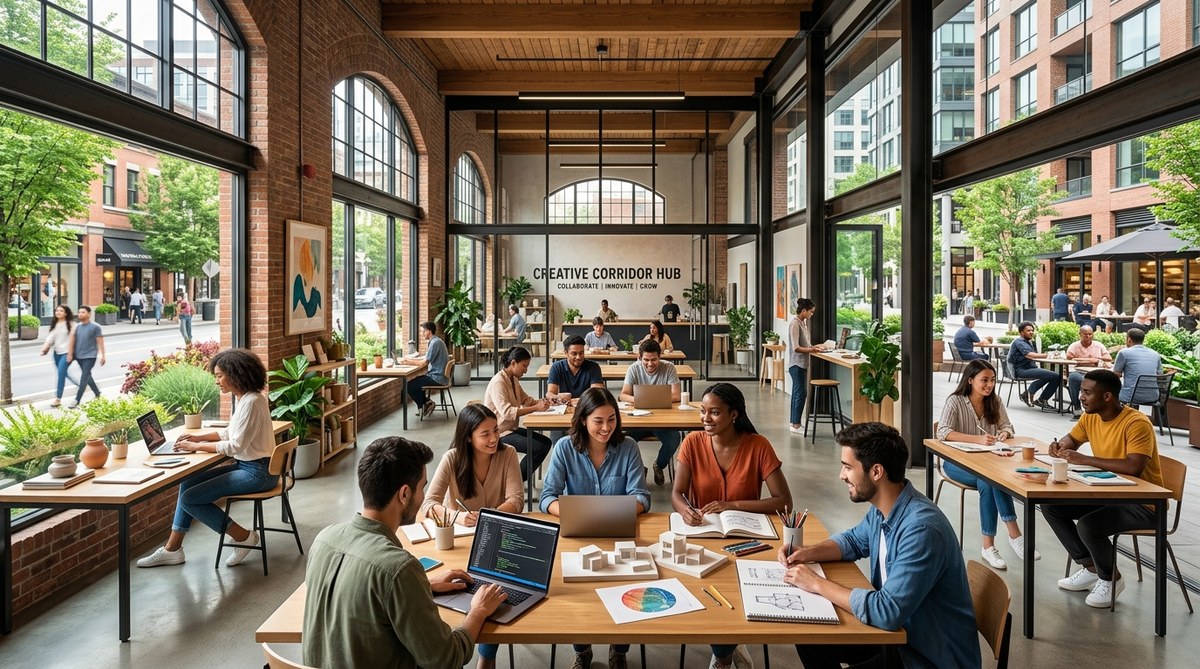
Iowa’s Creative Corridor is more than a string of vibrant districts; it is a living experiment in how artful networks, small businesses, and civic leadership can combine to spark real economic growth. In towns across the Corridor, artists, entrepreneurs, and researchers are collaborating to turn ideas into products, performances into revenue, and cultural experiences into new jobs. This is not just about making things look good. It is about making communities work better for the people who live in them. Creative hubs beat to a different rhythm—one where creativity meets commerce, and where local identity becomes a magnet for people and capital alike.
What are Creative Hubs and Why They Matter
Creative hubs are organized ecosystems where artists, startups, educators, investors, and residents come together to create, test, and scale new ideas. They are not confined to a single building; they are networks of spaces, programs, and relationships that enable experimentation, learning, and collaboration.
Defining features of a successful hub
- Shared spaces that welcome collaboration as the default mode
- Access to mentorship, training, and micro finance
- A steady pipeline of projects that blend culture and commerce
- Strong partnerships with universities, local government, and industry
- A culture of experimentation and shared learning
A well designed hub does more than host events. It creates a predictable environment where risk taking is supported, not stigmatized. It lowers barriers for creative entrepreneurs to prototype, test, and scale. It also helps residents see arts and culture as essential infrastructure for living and working in the community.
The Economic Levers of Creative Hubs
Creative hubs generate value through multiple channels. In the Creative Corridor this translates to more durable jobs, resilient businesses, and a more diversified tax base.
Key economic mechanisms
1) Job creation across a spectrum of roles
– Artists, designers, and performers
– Technologists, engineers, and makers
– Support staff in galleries, venues, and studios
– Administrative, marketing, and operations roles supporting creative firms
2) Diversification of the local economy
– Reducing reliance on a single sector such as manufacturing or agriculture
– Expanding into digital media, design services, and cultural tourism
– Encouraging cross pollination between service, creative, and tech sectors
3) Exports of creative work and services
– Design and branding services for regional and national clients
– Film and media production that uses local talent and spaces
– Cultural goods such as crafts, music, and fashion that travel beyond the Corridor
4) Tourism and place making
– Festivals, performances, and street activations draw visitors
– Food, beverage, and retail experiences tied to arts districts
– Placemaking that increases business foot traffic and dwell time
5) Skills development and workforce resilience
– Training programs that align with employer needs
– Up skilling for creative production, UX design, digital media, and storytelling
– Pathways from internships to full time roles in creative firms
A practical way to think about this is to map a hub’s programs to local economic goals. For example, if a city wants to boost tourism, the hub should pair cultural events with hospitality training and wayfinding improvements that help visitors spend more time and money in the area.
Cluster Effects and Local Synergies
When creative firms, educational institutions, and public partners cluster together, they create a powerful feedback loop. The proximity accelerates learning, shares resources, and lowers the cost of experimentation. In Iowa’s Creative Corridor, physical clusters can be seen in districts that combine galleries, makerspaces, co working offices, and performance venues with nearby universities and tech incubators.
How clusters boost growth
- Informal networks turn into formal collaborations through shared programs
- Cross discipline teams solve problems faster by blending design, engineering, and business perspectives
- Public investment yields private returns as firms expand and hire locally
- Talent retention improves when people can live, learn, and work in the same region
A practical way to cultivate cluster effects is to align anchor institutions with flexible spaces and accessible funding. For example, a university design program can run an accelerator in a repurposed warehouse where students, alumni, and local artisans co-create products for regional markets.
The Power of Partnerships
Partnerships are the backbone of any successful creative hub. They unlock capital, knowledge, and markets that individual actors could not access alone.
Public-Private Partnerships
- Coordinated investment in infrastructure, safety, and access to broadband
- Shared spaces and subsidies for studio space and performance venues
- Joint grant applications and tax incentives that reduce risk for new ventures
University-Industry Collaboration
- Research partnerships that translate academic discoveries into market ready products
- Internships and co op programs that feed local firms with fresh talent
- Public demonstrations of research outcomes through exhibitions and events
Arts Organizations and Small Businesses as Co-Creators
- Collaborative projects that pair artists with local manufacturers
- Community residencies that incubate new cultural businesses
- Market-ready products born from artist designer maker teams
The Corridor demonstrates that when partners share a common language—design thinking, entrepreneurship, and community impact—money follows into projects that matter locally. A simple way to start is to host quarterly “trailblazer talks” where artists, engineers, educators, and business leaders discuss ongoing opportunities and challenges openly.
Case Studies and Local Examples in the Creative Corridor
While each community is unique, there are clear templates that work well in the Corridor context.
- Corridor Film District: A cluster where filmmakers, sound designers, and prop makers collaborate with a local university to produce short films for national festivals. Outcomes include job creation in post production, increased demand for local venues, and revenue from licensing and distribution.
- Maker Arts Commons: A shared studio and fabrication lab that supports craft, metalwork, and digital fabrication. It serves hobbyists, hobbyist startups, and established craft businesses, creating an ongoing pipeline of small scale manufacturing jobs.
- Music and Tech Lab: A program that pairs musicians with software developers to create audio software, sound installations for venues, and branding packages for local retailers. The project expands the market for creative services while providing hands on experience for students and entrepreneurs.
These are not just stories; they are scalable templates. Communities can adapt them to suit local assets, budgets, and desired outcomes.
Measuring Impact
If you cannot measure it, you cannot manage it. Impact metrics help communities learn what works, where to invest more, and how to adapt programs over time.
Core metrics to track
- Creative sector employment and business births
- Average earnings and wage growth in creative occupations
- Number of firms that graduate from incubators or accelerators
- Revenue generated by creative industries and cultural events
- Visitor numbers and tourism spending tied to arts venues
- Access to capital and micro loan utilization
- Returns on public investments in infrastructure and programs
- Retention of graduates and skilled workers in the Corridor
Data sources might include local economic development reports, university research centers, chamber of commerce dashboards, and crowd sourced community surveys. A simple dashboard that updates quarterly can help decision makers see patterns and respond quickly.
Policy and Infrastructure to Support Creative Hubs
To sustain momentum, communities must align policy levers and infrastructure with creative hub goals.
Essential policy elements
- Affordable and adaptable studio and workshop spaces
- Flexible zoning that accommodates arts uses alongside light manufacturing and tech offices
- Public funding programs for seed grants, micro loans, and studio subsidies
- Tax incentives targeted at creative startups and cultural organizations
- Streamlined permit processes for art based events and pop up activations
- Broadband access and shared digital infrastructure for remote collaboration
Infrastructure investments
- Anchor venues such as performance spaces and galleries with year round occupancy
- Makerspaces or co working labs that are accessible to startups and residents
- Transit and walkability improvements to connect districts
- Public squares and outdoor stages for community events
- Safe, welcoming spaces for families, students, and workers
Creative hubs thrive where policy reduces friction for experimentation and collaboration. When a city makes it easier to start a creative business, it also makes it easier for residents to participate in the economy.
Challenges and How to Overcome Them
No strategy is perfect. The best hubs anticipate obstacles and treat them as growth opportunities.
Common obstacles
- Limited access to capital for early stage creative ventures
- Shortage of affordable, flexible workspaces
- Fragmented networks that complicate collaboration
- Difficulty translating creative work to scalable business models
- Balancing neighborhood character with growth
Practical solutions
- Create a dedicated fund or grant program for early stage creative projects
- Use a mix of lease guarantees, shared spaces, and policy incentives to lower real estate costs
- Build a central directory of partners, programs, and opportunities to improve connectivity
- Offer business training focused on pricing, contracts, and revenue models for artists
- Invest in inclusive, community oriented planning processes to preserve character while expanding
Addressing these challenges requires consistent leadership, clear measurement, and a willingness to adapt. Communities that stay curious and collaborative are typically the ones that see the strongest returns.
How to Cultivate a Creative Hub: A Practical Roadmap
If your community is ready to embark on this journey, here are concrete steps.
Step 1: Inventory and align assets
- Map arts venues, studios, universities, makerspaces, and tech firms
- Identify gaps in spaces, skills, and capital
- Create a shared vision that emphasizes local identity and economic goals
Step 2: Build a governance and funding model
- Form a cross sector steering committee with public, private, and civic leaders
- Establish a mixed funding approach including grants, private investment, and annual municipal support
- Set up an accountability framework with measurable objectives
Step 3: Create anchor programs
- Design an accelerator for creative startups
- Launch residency programs for artists and designers with market oriented outputs
- Implement a events calendar that aligns with tourism strategies
Step 4: Expand access and inclusion
- Prioritize affordable spaces and inclusive programming
- Provide training that expands digital literacy and entrepreneurship
- Ensure participation from underrepresented communities
Step 5: Measure, learn, and adapt
- Collect data on employment, revenue, and community impact
- Hold annual reviews to adjust priorities
- Share results openly to maintain trust and momentum
Looking Ahead: Trends in Creative Corridors
The next decade offers both opportunities and challenges. Digital technologies, global collaboration, and shifts in work patterns will shape how creative hubs function.
- Hybrid work and remote collaboration expand talent pools beyond local geographies
- Digital fabrication and maker economies allow small firms to prototype and produce locally
- Cultural tourism continues to grow when tied to authentic local stories and experiences
- Resilience planning is essential as communities respond to economic shocks and climate impacts
- Data driven decision making helps leaders allocate resources more efficiently
The Corridor should view these trends as open doors rather than constraints. Strategic experimentation now will yield compound benefits as the region scales its creative capacity.
Takeaways for Creators and Local Leaders
- Creative hubs are not just about art; they are engines for jobs, innovation, and place making
- Clusters and partnerships amplify impact by sharing risk and resources
- Measuring impact builds confidence and guides investment
- Policy and infrastructure must align with the daily realities of artists and firms
- A deliberate, inclusive approach ensures benefits reach the entire community
If you are a business leader, artist, city planner, or university partner in Iowa’s Creative Corridor, use this framework to catalyze projects that are meaningful, scalable, and resilient. Start with a clear map of assets, a simple governance model, and a few high impact pilot programs. The result is a thriving ecosystem where culture and commerce support one another, creating a better future for everyone in the Corridor.
Quick actions you can take this quarter
- Host a cross sector roundtable to identify shared goals
- Pilot a small makerspace or pop up venue in an underutilized building
- Apply for a regional arts and economic development grant
- Launch a monthly showcase that links artists with local businesses for collaboration
- Track three core metrics: jobs created, new businesses started, and visitor spend
As CreativeCorridor.co celebrates the rich tapestry of Iowa’s Creative Corridor, we are reminded that the heart of economic growth lies in people who dream big and collaborate bravely. By turning creative energy into practical opportunity, communities grow not just in numbers but in vitality, reputation, and hope. The road ahead is bright for those who choose to invest in culture as an economic strategy, and the Creative Corridor stands ready to lead the way.